

🌿 Why Ancient Indian Medicine Lost Its Golden Glory
🌟 Introduction – The Glory Days
The seed of Ayurveda originates in the myth of Samudra Manthan (the Churning of the Ocean). It is believed that from this cosmic event, Dhanvantari emerged with Amrita in one hand and the knowledge of Ayurveda in the other. From here, Ayurveda was established as a divine science of healing.
This sacred knowledge was carried forward by Rishis and the Gurukul system. In hermitages, students were taught about forest herbs, healing methods, and yogic lifestyle. Initially, this wisdom was framed within a spiritual and natural context.
Gradually, Ayurveda traveled from ashrams to royal palaces. Kings like Ashoka promoted it through hospitals and herbal gardens. Inside royal courts, Ayurveda transformed into a royal healthcare system.
On the battlefield, Ayurveda’s true value was seen. Vaidyas (physicians) healed wounded warriors and saved countless lives, turning Ayurveda into a practical science of healing.
Eventually, Ayurveda reached its pinnacle during the Golden Age. At great universities like Nalanda, Takshashila, and Vikramshila, Ayurveda became an organized curriculum. Anatomy, surgery, pharmacology, and psychology were taught systematically. Royal patronage and social respect elevated Ayurveda to its peak.
India thus became the global center of healthcare — where the wisdom of Dhanvantari passed from sages to gurukuls, from gurukuls to palaces, and from palaces to great universities. This was truly the Golden Age of Ayurveda.
Why Ayurveda Lost Its Shine After the Golden Era❓
During the rule of emperors like the Guptas and Mauryas, Ayurveda was at its zenith. Universities like Nalanda (founded 5th century CE), Takshashila (at least 5th century BCE), and Vikramshila led education and research in medicine.
Some records suggest that a single university could host 10,000+ students and 2,000 teachers.
With royal patronage came both funding and protection, enabling a structured healthcare ecosystem — gurukuls, palace herbal gardens, public hospitals, and research centers formed a complete healthcare network.
Ashoka’s edicts mention building hospitals and planting herbal gardens.
Together, these developments made Ayurveda a scientific and sustainable medical system. Yet despite such brilliance, a time came when Ayurveda began to lose its luster.
The reasons were many, including:
- ⚔️ Invasions and Destruction of Knowledge
- 🩺 Rise of Western Medicine
- 🏫 Decline of Traditional Institutions
- 💰 Social & Economic Factors
- 🧩 Internal Fragmentation of Ayurveda
- 🌊 Natural Disasters & Epidemics
- 👑 Decline of Patronage Culture
- 🔄 Shift in Public Preference & Cultural Changes
- 📜 Loss of Documentation & Translation Issues
- 🗺️ Geographic & Trade Shifts
Analyzing all these reasons in depth is not possible here. Hence, we will focus on one primary cause — while others shall be discussed in future works.
⚔️ Invasions and Destruction of Knowledge
🌍 Greek Influence (326 BCE, Alexander)
When Alexander invaded India, Greek historians like Megasthenes and Diodorus Siculus documented Indian physicians and herbal practices. At that time, Ayurveda was advanced — surgeries, cataract operations, bone setting, herbal pharmacology, and holistic lifestyle management were already practiced.
Though contact with Greek and Unani medicine encouraged knowledge exchange, it also created a bias. Greek methods were seen as “superior,” while Indian practices were often described as “exotic” or “ritualistic.” This reduced the scientific credibility of Ayurveda in global perception.
Evidence: Megasthenes in his book Indica (preserved in Strabo’s Geographica, 15.1.60) wrote that Indian physicians performed advanced surgeries and detox therapies. Yet these records were never systematically adopted in Europe.
Impact: Ayurveda gained global recognition but lacked formal adoption and scientific validation, which weakened its long-term position.
🏛 The Vanishing of Universities
The most devastating factor behind Ayurveda’s decline was the destruction of great centers of learning.
🏛 Nalanda University (Founded: 5th century CE, Destroyed: 1193 CE)

Nalanda was not only a Buddhist center but also a world-famous hub of Ayurveda and medical sciences. Thousands of students from across Asia studied Ayurveda, surgery, and herbal medicine there. With over 2,000 teachers and physicians, Nalanda was a true global reservoir of knowledge.
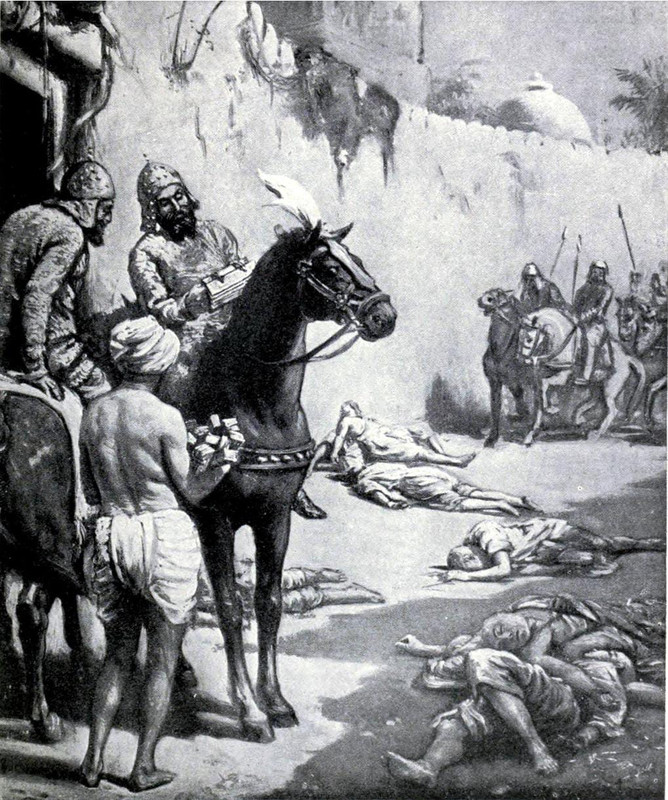
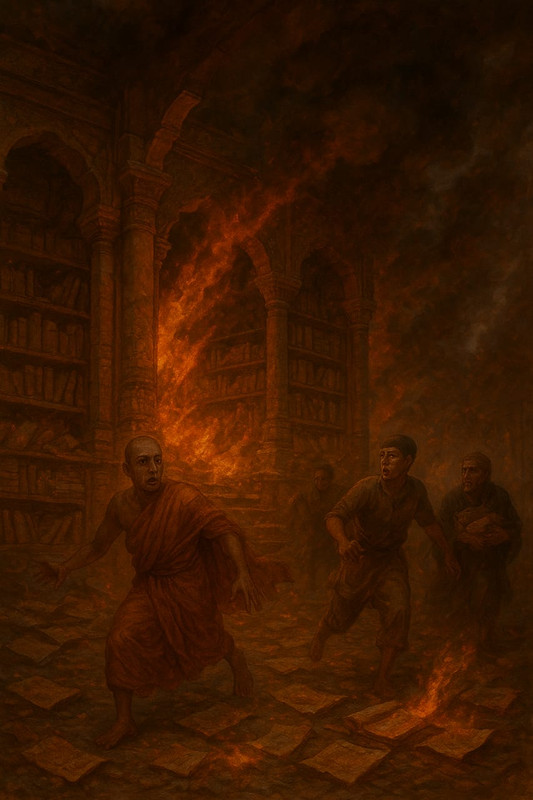
But in 1193 CE, Bakhtiyar Khilji burned Nalanda. Its great library, containing an estimated 9 million manuscripts, burned for months (Taranatha, History of Buddhism in India). Along with the buildings, centuries of research, medical practices, and the gurukul tradition vanished overnight.
The tragedy was not the result of war, but of one man’s intolerance and envy. This fire destroyed not just India’s heritage, but also a part of the world’s collective knowledge — a loss that has never been recovered.
👉 The destruction of Nalanda marked the beginning of the collapse of organized Ayurvedic education.
🏛 Takshashila University (Founded: ~6th century BCE, Destroyed: 5th century CE)
Recognized as the world’s first residential university, Takshashila was where Charaka himself taught medicine. Students came from Greece, China, Korea, and Central Asia. Subjects included Ayurveda, astronomy, mathematics, and military sciences.
But in the 5th century CE, Hun invasions destroyed Takshashila. With it, many invaluable texts and scientific research were lost forever.
🏛 Vikramshila University (Founded: 8th century CE, Destroyed: 12th century CE)
Vikramshila, established by Pala king Dharmapala, was considered on par with Nalanda. It specialized in Ayurveda, Buddhist philosophy, and Tantric studies.
In the 12th century, Turk invaders destroyed it, burning its libraries and gurukuls. With the fall of Vikramshila, yet another pillar of ancient knowledge collapsed.
👉 The parallel destruction of these three great universities was an irreversible loss to both India and the world. Ayurveda never regained its organized institutional base after this catastrophe.
🕌 The Medieval Period (Mughal Rule, 16th–18th Century)
During the Mughal Empire, Ayurveda was sidelined while Unani medicine received royal patronage.
Lack of Royal Support
Akbar (1556–1605) appointed Unani Hakims as chief court physicians, providing state funding for their hospitals and training centers.
Jahangir (1605–1627) and Shah Jahan (1628–1658) also supported Unani medicine, while Ayurvedic practitioners survived mainly under local kings, landlords, and private patrons.
Institutional Impact
Ayurvedic gurukuls and hospitals lost imperial funding, leading to the breakdown of organized education and research networks.
Imperial archives preserved Unani and Persian texts, but Ayurvedic manuscripts and commentaries were neglected.
Knowledge Transfer & Documentation
Textual documentation of Ayurveda slowed dramatically. New discoveries and surgical techniques were rarely recorded systematically.
This weakened the standardized curriculum and supply of trained practitioners.
Long-term Effect
Ayurveda lost global exposure and institutional support. Against the rise of Western medical documentation and European scientific validation, Ayurveda was increasingly labeled as merely “local” or “ritualistic.”
As gurukuls, hospitals, and royal herbal gardens declined, knowledge transfer, research, and innovation were severely disrupted.
British Colonial Era (18th–19th Century)
From the end of the 18th century, the British East India Company and later the British Crown gave official endorsement to Western medicine (Allopathy) through their colonial policies, while Ayurveda was systematically neglected. 🩺
🏛️ Institutional Neglect:
- Ayurvedic gurukuls, hospitals, and colleges did not receive colonial funding.
- The British established institutions such as the Calcutta Medical College (1835) and public medical colleges in Bombay and Madras that focused exclusively on Western medicine, weakening Ayurveda’s formal education and research network.
- Ayurvedic teaching was largely confined to private, rural, and family-based systems.
📜 Lord Macaulay’s Education Policy (1835):
- In his famous Minute on Indian Education, Macaulay declared Sanskrit and Ayurveda-based education as “outdated” and “unscientific.”
- As part of this policy, Ayurvedic schools and gurukuls were systematically sidelined, while English-based Western curriculum was made mandatory.
- The direct effect was the loss of state-level patronage for Sanskrit scholars and Ayurvedic acharyas.
📚 Loss of Manuscripts and Research:
- Ayurvedic texts were dismissed as “unscientific” and many manuscripts were sent to Europe in the name of research, where their study and cataloging remained limited and fragmented.
- This resulted in the permanent loss of thousands of texts, commentaries, and clinical observations, including rare manuscripts of the Charaka Samhita and Sushruta Samhita.
⚖️ Marginalization of Practitioners:
- Traditional Ayurvedic vaidyas were denied official recognition and licenses, which restricted their career opportunities and institutional support.
- As a result, the flow of Ayurvedic research and innovation was halted, and practices became confined to rural and private levels.
📉 Long-term Impact:
The organized knowledge system of Ayurveda, developed over centuries, collapsed under the pressure of invasions and colonial neglect. ⚔️
Manuscripts were lost, institutions destroyed, and practitioners marginalized, which significantly reduced Ayurveda’s global recognition and scientific credibility.
These effects are still partially visible in Ayurvedic education and research today, requiring extra effort for modern revival.
⚔️ Additional Invasions and Attacks
During the 11th century CE (998–1030 CE), when Mahmud Ghaznavi launched his attacks on North India, his targets included not only capitals but also centers of education and healthcare. Temples, gurukuls, libraries, and ashrams were attacked, leading to the destruction of numerous ancient Ayurvedic manuscripts and research materials. Many scholars and vaidyas were either killed or forced to flee with their knowledge, breaking the chain of intergenerational transfer. 📖
Gurukuls and hospitals, once flourishing under royal patronage and community support, suffered massive damage. As a result, the structured system of Ayurvedic education and healthcare weakened, making the tradition vulnerable to Western and later Mughal influences. This devastation reduced Ayurveda from an organized, scientific form to a limited medical practice. 🏥
Furthermore, invasions by the Huns (5th–6th century CE), Turkish and Afghan rulers (12th–13th century CE), and others caused immense damage to Ayurveda. Ancient gurukuls, hospitals, and herbal gardens were destroyed, while many vaidyas and students fled to preserve their knowledge. This was not merely the loss of a medical system but also the rupture of a long-standing tradition of knowledge and social service, leading to Ayurveda’s gradual decline in brilliance. 🌿
✅ Conclusion
The journey of Ayurveda is a living history—one that reflects not only medicine but also the cultural and philosophical identity of India. 🌍
During the Golden Age of Gupta and Nalanda, Ayurveda thrived as a science—where surgery (Sushruta), pharmacology (Charaka), and medical universities built a scientific healthcare system. However, invasions and colonial rule dismantled its institutional backbone. Gradually, Ayurveda drifted away from its scientific essence and came to be perceived more as a religious tradition. 📜
The knowledge of the scriptures became confined to rituals and faith, replacing research and critical study. Yet, this devotional preservation ensured that Ayurveda survived in popular consciousness. Without this cultural reverence, the knowledge might have been lost forever. 🙏
After India’s independence, Ayurveda re-emerged as a science through the establishment of the AYUSH Ministry, Ayurvedic universities, and the Global Wellness Movement. Today, Ayurveda is reaching WHO standards and, together with yoga, has evolved into a holistic healthcare model. 🌱
🌿 Final Reflection:
“Ayurveda was once a science, later turned into a religious tradition, and today it is once again becoming a science—an eternal proof of its resilience and of India’s cultural faith.” ✨
------------हिंदी में------------
🌿 परिचय – वैदिक वैभव
आयुर्वेद का बीज समुद्र मंथन से उत्पन्न हुआ। कहते हैं कि इस समुद्र मंथन से धन्वंतरि अमृत के साथ आयुर्वेद का ज्ञान लेकर आए। यही से आयुर्वेद दिव्य विद्या के रूप में स्थापित हुआ।
इस दिव्य विद्या को ऋषि-मुनि और गुरुकुल परंपरा ने आगे बढ़ाया। आश्रमों में छात्रों को जंगल की वनस्पति, उपचार पद्धति और योगिक जीवनशैली सिखाई जाती थी। यह ज्ञान प्रारंभ में केवल आध्यात्मिक और प्राकृतिक ढांचे में था।
धीरे-धीरे आयुर्वेद ने अपना सफर आश्रमों से राजमहलों तक किया। अशोक जैसे राजाओं ने इस विद्या को अस्पताल और हर्बल गार्डन के माध्यम से बढ़ावा दिया। राजमहलों में आयुर्वेद एक रॉयल हेल्थकेयर सिस्टम बन गया।
जब युद्ध होते थे, तब आयुर्वेद का बलिदानी और व्यावहारिक स्वरूप सामने आता था। मैदान युद्ध में वैद्य योद्धाओं के घाव भरते और सैनिकों की जान बचाते थे। इसने आयुर्वेद को प्रैक्टिकल साइंस ऑफ हीलिंग बना दिया।
समय आने पर आयुर्वेद ने अपने चरम बिंदु को छुआ। नालंदा, तक्षशिला, विक्रमशिला जैसी विश्वविद्यालयों में आयुर्वेद एक संगठित पाठ्यक्रम के रूप में पढ़ाया जाने लगा। यहाँ एनाटॉमी, सर्जरी, फार्माकोलॉजी और साइकोलॉजी तक का ज्ञान संरचित रूप में सिखाया जाता था। राजाओं का पैट्रोनज और सामाजिक सम्मान आयुर्वेद को गोल्डन पीक तक पहुंचा दिया।
भारत-भूमि पर धन्वंतरि का ज्ञान ऋषि-मुनि से गुरुकुल तक, गुरुकुल से राजमहल तक और राजमहल से विश्वविद्यालय तक पहुंच गया। यही था आयुर्वेद का स्वर्ण युग, जब भारत ग्लोबल हेल्थकेयर लीडर और दुनिया का केंद्र था।
स्वर्ण युग के बाद आयुर्वेद क्यों हुआ कमज़ोर?
गुप्त और मौर्य जैसे सम्राटों के दौरान आयुर्वेद अपने चरम पर था।
विश्वविद्यालय जैसे नालंदा (स्थापना: 5वीं सदी), तक्षशिला (~5वीं सदी ईसा पूर्व) और विक्रमशिला में आयुर्वेदिक विद्वान अपनी शिक्षा और शोध का नेतृत्व करते थे।
एक ही विश्वविद्यालय में 10,000+ छात्र और 2,000 शिक्षक होने के प्रमाण मिलते हैं।
राजाओं के पैट्रोनज से फंड और राज्य की सुरक्षा मिलती थी, जिससे एक संगठित हेल्थकेयर स्ट्रक्चर खड़ा हुआ — गुरुकुल, राजमहल के हर्बल गार्डन, सार्वजनिक अस्पताल और रिसर्च सेंटर सब एक इकोसिस्टम बनाते थे।
अशोक ने अपने एडिक्ट्स में अस्पताल बनाने और हर्बल गार्डन लगाने का उल्लेख किया है।
यह सब मिला कर आयुर्वेद को एक वैज्ञानिक और स्थायी हेल्थकेयर सिस्टम बनाता था।
लेकिन फिर भी, इतनी शान और सफलता के बाद एक समय आया जब आयुर्वेद धीरे-धीरे अपनी चमक खो बैठा।
इसके पीछे कई कारण थे:
- ⚔️ आक्रमण और ज्ञान का विनाश
- 🩺 पश्चिमी चिकित्सा का उदय
- 🏫 पारंपरिक संस्थाओं का पतन
- 💰 सामाजिक और आर्थिक कारक
- 🧩 आयुर्वेद का आंतरिक विभाजन
- 🌊 प्राकृतिक आपदाएँ और महामारी
- 👑 पैट्रोनज संस्कृति का पतन
- 🔄 सार्वजनिक प्राथमिकताओं और सांस्कृतिक बदलाव
- 📜 दस्तावेजीकरण और अनुवाद की कमी
- 🗺️ भौगोलिक और व्यापारिक बदलाव
इनमें से सभी कारणों का विस्तार करना असंभव है, लेकिन यहाँ हम मुख्य कारण की चर्चा करेंगे।
⚔️ आक्रमण और ज्ञान का विनाश
🌍 यूनानी प्रभाव (326 ईसा पूर्व, सिकंदर)
जब सिकंदर भारत आया, तो यूनानी इतिहासकार जैसे मेगस्थनीज और डायोडोरस सिकुलस ने भारतीय चिकित्सकों और हर्बल चिकित्सा पद्धतियों का उल्लेख किया। उस समय आयुर्वेद बहुत उन्नत था — लोग सर्जरी, मोतियाबिंद उपचार, हड्डियों की सेटिंग, हर्बल फार्माकोलॉजी और समग्र जीवनशैली में निपुण थे।
यूनानी और उनानी सिस्टम के संपर्क से ज्ञान का आदान-प्रदान बढ़ा, लेकिन साथ ही यूनानी पद्धतियों को “सुपीरियर” और भारतीय प्रथाओं को “विदेशी या अनुष्ठानिक” बताया गया। इस पूर्वाग्रह की वजह से आयुर्वेद की वैज्ञानिक विश्वसनीयता धीरे-धीरे कम दिखने लगी।
साक्ष्य: “मेगस्थनीज ने अपनी किताब ‘इंडिका’ (जिसका उल्लेख स्ट्रैबो के Geographica, 15.1.60 में है) में लिखा है कि भारत के चिकित्सक उन्नत सर्जिकल प्रक्रिया और डिटॉक्स थेरेपी करते थे, लेकिन ये रिकॉर्ड यूरोप में कभी व्यवस्थित रूप से अपनाए नहीं गए।
प्रभाव: आयुर्वेद का ज्ञान वैश्विक मान्यता में था, लेकिन औपचारिक अपनाने और वैज्ञानिक पुष्टि में पीछे रह गया।
विश्वविद्यालय विनाश
आयुर्वेद के पतन का सबसे पहला और बड़ा कारण था विद्या और ज्ञान के केंद्रों का विनाश।
🏛 नालंदा विश्वविद्यालय (स्थापना: 5वीं सदी, पतन: 1193 ई.)
नालंदा केवल एक बौद्ध केंद्र नहीं था, बल्कि आयुर्वेद और चिकित्सा शास्त्र का विश्व प्रसिद्ध केंद्र था। यहाँ एशिया के विभिन्न हिस्सों से हजारों छात्र आयकर आयुर्वेद, सर्जरी और हर्बल मेडिसिन सीखते थे। नालंदा में लगभग 2,000 से अधिक आचार्य, चिकित्सक और विद्वान शिक्षा देते थे। यह सिर्फ भारत का ज्ञान केंद्र नहीं, बल्कि पूरी दुनिया का नॉलेज रिज़र्वॉयर था।
लेकिन 1193 ई. में बख़्तियार खिलजी ने इस महान विश्वविद्यालय को आग लगा दी। नालंदा की लाइब्रेरी में रखे 9 मिलियन मैन्युस्क्रिप्ट्स महीनों तक जलते रहे (Taranatha, History of Buddhism in India)। सिर्फ इमारतें ही नहीं, बल्कि हजारों शोधकार्य, चिकित्सा पद्धतियाँ और गुरुकुल परंपरा एक ही दिन में नष्ट हो गई।
सबसे दुखद बात यह थी कि यह विनाश किसी युद्ध का परिणाम नहीं था, बल्कि एक व्यक्ति की ईर्ष्या और असहनशीलता का नतीजा था। इस आग में केवल भारत का ही नहीं, बल्कि पूरी दुनिया का एक हिस्सा खो गया — एक ऐसा ज्ञान जिसे दुनिया आज तक पुनः प्राप्त नहीं कर पाई।
👉 नालंदा का विनाश आयुर्वेद के इतिहास का वह मोड़ था, जहाँ से इसका संगठित शिक्षा सिस्टम धीरे-धीरे ढहने लगा।
🏛 तक्षशिला विश्वविद्यालय (स्थापना: ~6वीं सदी ईसा पूर्व, पतन: 5वीं सदी ई.)
तक्षशिला को दुनिया की पहली रेजिडेंशियल यूनिवर्सिटी माना जाता है। यहाँ चरक जैसे महान आयुर्वेदाचार्य ने चिकित्सा शास्त्र पढ़ाया। यह विश्वविद्यालय भारत के अलावा ग्रीस, चीन, कोरिया और सेंट्रल एशिया से आए छात्रों का ज्ञान केंद्र था। आयुर्वेद, खगोल विज्ञान, गणित और सैन्य विज्ञान सभी का उन्नत अध्ययन यहाँ होता था।
लेकिन 5वीं सदी ई. में हुनों के आक्रमण ने इस प्राचीन विश्वविद्यालय को पूरी तरह समाप्त कर दिया। इसके साथ ही आयुर्वेद और अन्य शास्त्रों के कई प्राचीन ग्रंथ और शोध हमेशा के लिए खो गए।
🏛 विक्रमशिला विश्वविद्यालय (स्थापना: 8वीं सदी, पतन: 12वीं सदी)
विक्रमशिला को पाल राजा धर्मपाल ने स्थापित किया और यह नालंदा के बराबर एक महान विश्वविद्यालय माना जाता था। यहाँ आयुर्वेद के साथ-साथ बौद्ध दर्शन और तंत्र शास्त्र का भी विस्तार से अध्ययन होता था।
लेकिन 12वीं सदी में फिर से तुर्क आक्रमणकारियों ने इस विश्वविद्यालय को बर्बाद कर दिया। नालंदा की तरह इसकी लाइब्रेरी और गुरुकुल को भी आग लगा दी गई।
👉 इन तीन महान विश्वविद्यालयों का समानांतर विनाश भारत और विश्व के लिए एक अप्रत्यक्ष और अपरिवर्तनीय क्षति था, जहाँ से आयुर्वेद और प्राचीन ज्ञान की संगठित परंपरा कभी पुनः अपने मूल रूप में लौट नहीं पाई।
🕌 मध्यकालीन युग (मुगल शासन, 16वीं–18वीं सदी)
मुगल साम्राज्य में आयुर्वेद को माध्यमिक प्राथमिकता मिली, जबकि यूनानी चिकित्सा को रॉयल पैट्रोनज और दरबार के चिकित्सकों की प्राथमिकता दी गई।
राजाओं का असमर्थन:
अकबर (1556–1605) ने अपने दरबार में यूनानी हकीमों को मुख्य दरबारी चिकित्सक की स्थिति दी, और यूनानी अस्पतालों एवं प्रशिक्षण केंद्रों को वित्तीय सहायता प्रदान की।
जाहंगिर (1605–1627) और शाहजहाँ (1628–1658) ने भी यूनानी प्रणाली को राज्य स्तर का समर्थन दिया, जबकि आयुर्वेदिक वैद्य अधिकतर स्थानीय राजा, जमींदार और निजी संरक्षक के अधीन सीमित अभ्यास करते रहे।
संस्थागत प्रभाव:
आयुर्वेदिक गुरुकुल और अस्पतालों को साम्राज्यीय फंडिंग नहीं मिली, जिससे संगठित शिक्षा और शोध का व्यवस्था धीरे-धीरे टूटने लगा।
साम्राज्यीय अभिलेखागार और पुस्तकालयों में यूनानी और फारसी चिकित्सा ग्रंथ संरक्षित किए गए, लेकिन आयुर्वेद के मैन्युस्क्रिप्ट्स और टिप्पणियों पर ध्यान नहीं दिया गया।
ज्ञान हस्तांतरण और दस्तावेजीकरण:
आयुर्वेद की पाठ्य सामग्री और टिप्पणियों का काम रुक गया, और नई खोजों या सर्जिकल तकनीकों का रिकॉर्डिंग सिस्टम कमजोर हो गया।
इससे आयुर्वेदिक प्रथाओं का मानकीकृत पाठ्यक्रम और प्रशिक्षित चिकित्सकों की आपूर्ति सीमित रह गई।
दीर्घकालीन प्रभाव:
आयुर्वेद को वैश्विक संपर्क और संस्थागत समर्थन नहीं मिला।
पश्चिमी शैली के चिकित्सा दस्तावेज और यूरोपीय वैज्ञानिक मान्यता के सामने आयुर्वेद को “स्थानीय या अनुष्ठानिक” माना जाने लगा।
गुरुकुल, अस्पताल और रॉयल हर्बल गार्डन का पतन हुआ, जिससे ज्ञान हस्तांतरण, शोध और नवाचार में गंभीर रुकावट आई।
ब्रिटिश औपनिवेशिक काल (18वीं–19वीं सदी)
18वीं सदी के अंत से ब्रिटिश ईस्ट इंडिया कंपनी और बाद में ब्रिटिश क्राउन ने अपनी औपनिवेशिक नीतियों के जरिए पश्चिमी चिकित्सा (एलोपैथी) को आधिकारिक समर्थन दिया, और आयुर्वेद को व्यवस्थित रूप से उपेक्षित किया।
संस्थागत उपेक्षा:
- आयुर्वेद के गुरुकुल, अस्पताल और कॉलेज को औपनिवेशिक फंडिंग नहीं मिली।
- ब्रिटिश ने कलकत्ता मेडिकल कॉलेज (1835) और बॉम्बे, मद्रास में सार्वजनिक मेडिकल कॉलेज स्थापित किए जो केवल पश्चिमी चिकित्सा पर केंद्रित थे, जिससे आयुर्वेद का औपचारिक शिक्षा और शोध नेटवर्क कमजोर हो गया।
- आयुर्वेदिक शिक्षा अधिकांशतः निजी, ग्रामीण और पारिवारिक प्रणाली तक सीमित रह गई।
लॉर्ड मेकाले की शिक्षा नीति (1835):
- मेकाले ने अपनी प्रसिद्ध Minute on Indian Education में संस्कृत और आयुर्वेद-आधारित शिक्षा को “पुरानी” और “अवैज्ञानिक” घोषित किया।
- इस नीति के तहत, आयुर्वेदिक स्कूल और गुरुकुल को व्यवस्थित रूप से साइडलाइन किया गया और अंग्रेजी आधारित पश्चिमी पाठ्यक्रम को अनिवार्य बनाया गया।
- इसका प्रत्यक्ष प्रभाव यह था कि संस्कृत विद्वान और आयुर्वेदाचार्य की राज्य-स्तरीय संरक्षकता समाप्त हो गई।
मैन्युस्क्रिप्ट्स और शोध का नुकसान:
- आयुर्वेदिक ग्रंथों को “अवैज्ञानिक” कहकर त्याग दिया गया, और कई मैन्युस्क्रिप्ट्स को यूरोप भेज दिया गया शोध के नाम पर, जहां उनका अध्ययन और सूचीबद्ध करना सीमित और खंडित रहा।
- इससे हजारों ग्रंथ, टिप्पणियाँ और क्लिनिकल अवलोकन स्थायी रूप से खो गए, जैसे चरक संहिता और सुश्रुत संहिता के कई दुर्लभ मैन्युस्क्रिप्ट्स।
वैद्याओं का हाशिए पर होना:
- परंपरागत आयुर्वेदिक वैद्य को आधिकारिक मान्यता और लाइसेंस नहीं मिले, और उनके करियर अवसर और संस्थागत समर्थन कम हो गए।
- परिणामस्वरूप, आयुर्वेदिक शोध और नवाचार का प्रवाह रुक गया, और प्रथाएँ मुख्य रूप से ग्रामीण और निजी स्तर पर सीमित रह गईं।
दीर्घकालीन प्रभाव:
आयुर्वेद का संगठित ज्ञान प्रणाली, जो सदियों में विकसित हुआ था, आक्रमणों और औपनिवेशिक उपेक्षा के कारण ध्वस्त हो गया।
मैन्युस्क्रिप्ट्स खो गए, संस्थाएँ नष्ट हुईं और वैद्य हाशिए पर चले गए, जिससे आयुर्वेद की वैश्विक मान्यता और वैज्ञानिक विश्वसनीयता काफी कम हो गई।
यह प्रभाव आज भी आयुर्वेदिक शिक्षा और शोध में आंशिक रूप से दिखाई देता है, और आधुनिक पुनरुद्धार के लिए अतिरिक्त प्रयास की आवश्यकता है।
अन्य हमले और विनाश
11वीं सदी ई. (998–1030 ई.) में, जब महमूद गजनवी ने उत्तर भारत में अपने आक्रमण शुरू किए, तब केवल राजधानियाँ ही नहीं बल्कि शिक्षा और स्वास्थ्य केंद्र भी उनके लक्ष्य में थे। उन्होंने मंदिर, गुरुकुल, पुस्तकालय और आश्रम पर हमला किया, जिससे अनेक प्राचीन आयुर्वेदिक मैन्युस्क्रिप्ट्स और शोध सामग्री नष्ट हो गई। कई विद्वान और वैद्य या तो मारे गए या अपना ज्ञान लेकर भाग गए, जिससे पीढ़ी-दर-पीढ़ी ज्ञान का सिलसिला टूट गया।
गुरुकुल और अस्पताल, जो पहले राजकीय संरक्षकता और समुदाय के समर्थन पर फल-फूल रहे थे, बहुत नुकसान झेल गए। इसका परिणाम यह हुआ कि आयुर्वेदिक शिक्षा और स्वास्थ्य प्रणाली कमजोर हो गई और यह परंपरा धीरे-धीरे पश्चिमी और बाद के मुग़ल प्रभावों के सामने सुरक्षित नहीं रह गई। इस विनाश ने आयुर्वेद को केवल एक चिकित्सा प्रथा तक सीमित कर दिया और उसके स्वर्णिम युग के संगठित और वैज्ञानिक स्वरूप से दूर कर दिया।
इसके अलावा, हुन (5वीं–6वीं सदी ई.), तुर्क और अफगान आक्रमण (12वीं–13वीं सदी ई.) और अन्य आक्रमणों के कारण आयुर्वेद को बड़ा नुकसान हुआ। प्राचीन गुरुकुल, अस्पताल और हर्बल गार्डन तबाह हो गए, और कई वैद्य और छात्र अपना ज्ञान बचाकर भागे। यह केवल चिकित्सा प्रणाली का नुकसान नहीं था, बल्कि पीढ़ियों से चला आ रहा ज्ञान और सामाजिक सेवा की परंपरा भी टूट गई, जिससे आयुर्वेद की चमक धीरे-धीरे कम होने लगी।
✅ निष्कर्ष
आयुर्वेद की यात्रा एक जीवित इतिहास है—जो केवल चिकित्सा तक सीमित नहीं, बल्कि भारत की सांस्कृतिक और दार्शनिक पहचान का दर्पण है।
गुप्त और नालंदा के स्वर्ण युग में आयुर्वेद एक विज्ञान था—जहाँ सर्जरी (सुश्रुत), फार्माकोलॉजी (चरक) और मेडिकल विश्वविद्यालय एक संगठित और वैज्ञानिक हेल्थकेयर सिस्टम बनाते थे। लेकिन आक्रमणों और औपनिवेशिक शासन ने इसकी संस्थागत रीढ़ तोड़ दी। इसके बाद आयुर्वेद धीरे-धीरे अपने असली वैज्ञानिक स्वरूप से हटकर एक धार्मिक परंपरा जैसा बन गया।
ग्रंथों का ज्ञान कहीं पूजा-पाठ और अनुष्ठानों में सीमित हो गया, शोध और आलोचनात्मक अध्ययन की जगह विश्वास और श्रद्धा ने ले ली। यह तथ्य है कि इसी रूप ने आयुर्वेद को लोक चेतना में जिंदा रखा। अगर लोग इसे परंपरा के रूप में न मानते, तो शायद यह ज्ञान हमेशा के लिए खो जाता।
स्वतंत्रता के बाद जब भारत ने अपनी पहचान पुनः खोजी, आयुर्वेद फिर से विज्ञान के रूप में जाग उठा—AYUSH मंत्रालय, आयुर्वेदिक विश्वविद्यालय और Global Wellness Movement के माध्यम से। आज आयुर्वेद WHO standards तक पहुँच रहा है और योग के साथ मिलकर एक समग्र स्वास्थ्य मॉडल बन गया है।
🌱 अंतिम विचार:
“आयुर्वेद एक समय शास्त्र था, फिर एक धार्मिक परंपरा बना, और आज फिर से विज्ञान बन रहा है—यह उसकी अमर शक्ति और भारत की सांस्कृतिक आस्था का सबूत है।” 🌿










































2 Comments
Nice
ReplyDeleteThank you 😊 Stay connected for more helpful updates.
Delete